Materials by nature, styled by you
Oak
The natural partner to timber framing projects in the UK, Oak has been used for and lasts for centuries. A naturally very durable and incredibly strong timber grown in the UK but more commonly farmed productively in Europe. Oaks natural rot resistance means that it can be used externally without any treatments and over time will adopt a soft silvery appearance, used internally it will retain a lovely warm honey colour. Oak often grows in natural curves which can provide great sections to include in your design.


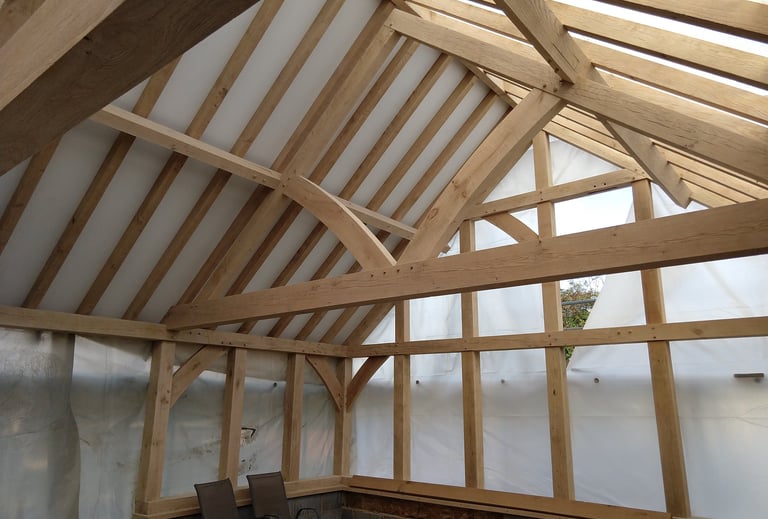
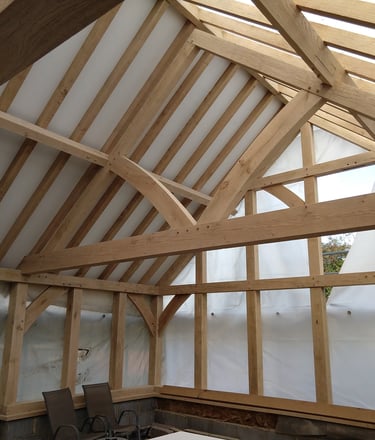
Green Oak does have one of the largest shrinkage rates of the common framing timbers, meaning that over the first 5 years or so as it dries out it will move the most. Expect framing members to check (crack), change shape, twist and bow, opening up the joinery slightly. This is natural and only adds to the character of the structure, the timber actually hardens and gets stronger as part of this process making the overall structure even stiffer.
All aspects of the frames future movement will be considered as part of the early design phase to ensure any critical joints, glazing and other joinery continue to function perfectly.
Douglas Fir
A great framing timber but a coniferous softwood this time, very different in appearance and character to oak, doug-fir comes with a bright red-pink hue in the heartwood and a lighter coloured sapwood. Not naturally rot resistant, this timber is best suited to internal framing uses only, it is a very strong timber much faster growing than oak and usually in straighter long sections so any curves will need to be shaped.


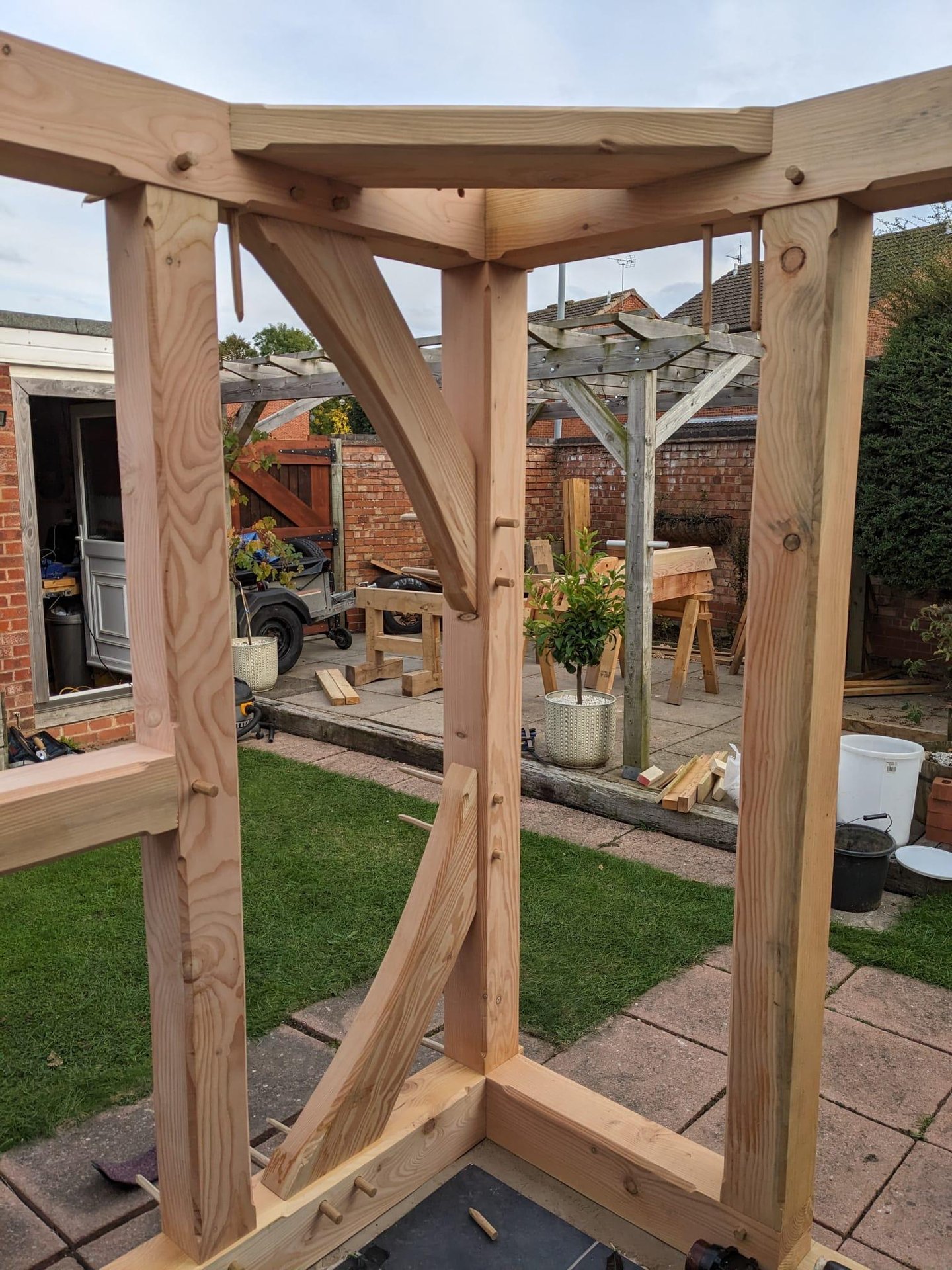
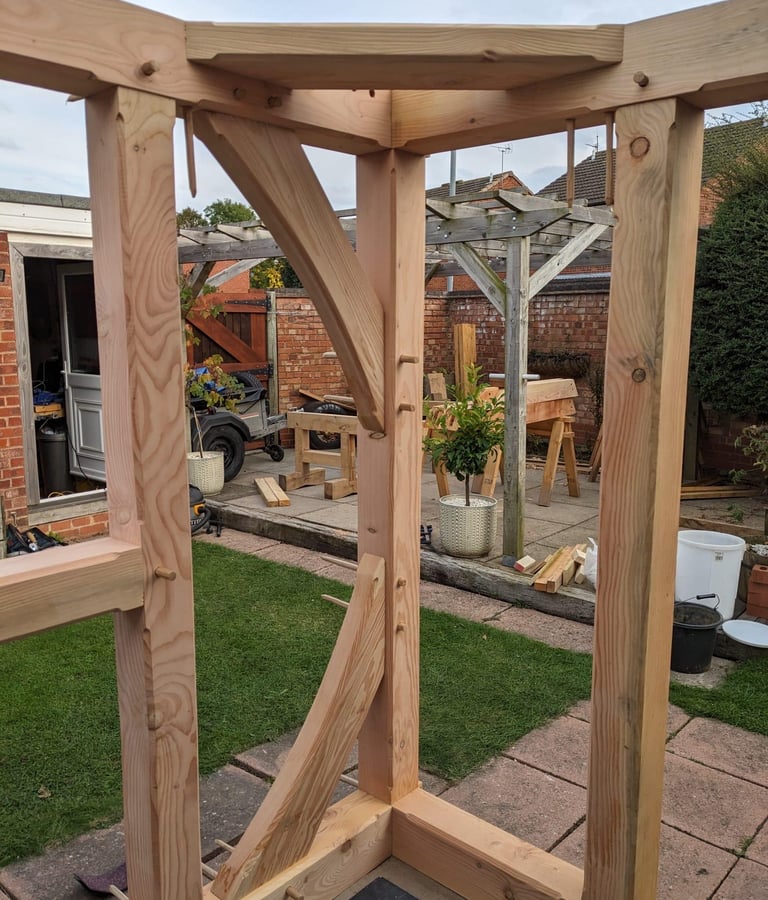
Doug-fir is cheaper than Oak and much less dense so assembly is a bit easier on the back! It suits more contemporary designs as it is a more stable choice having a lower shrinkage rate than oak. This means it will be a more peaceful timber to live with, less noise from movement, checking and the joinery will retain a tighter fitting appearance.
Being a faster growing timber than oak it can be a more sustainable choice but a lot of that comes down to how individual woodlands and forests are managed. Doug-fir is easy to source in the UK with a lot of it grown in Scotland.
Larch
Another fantastic softwood framing timber that is similar to but lighter in appearance than doug-fir, it is more dense and durable out in the elements having a high sap content so can be used externally. Often it is partnered with doug-fir, the larch being used in the external envelope as cladding but is just as suited to structural framing.


Again cheaper than Oak but similar in price to doug-fir, but slightly more dense, it basically sits in-between the other 2 in terms of shrinkage, movement and susceptibility to checking. So it really is down to personal preference, design and budgetary constraints as to which timber is your preferred choice.
Contact
Email: steve@elliottstimberframing.co.uk
Mobile: +44 (0) 7505 011463
Wellesbourne
Warwickshire
© 2026. All rights reserved.