Services
Design
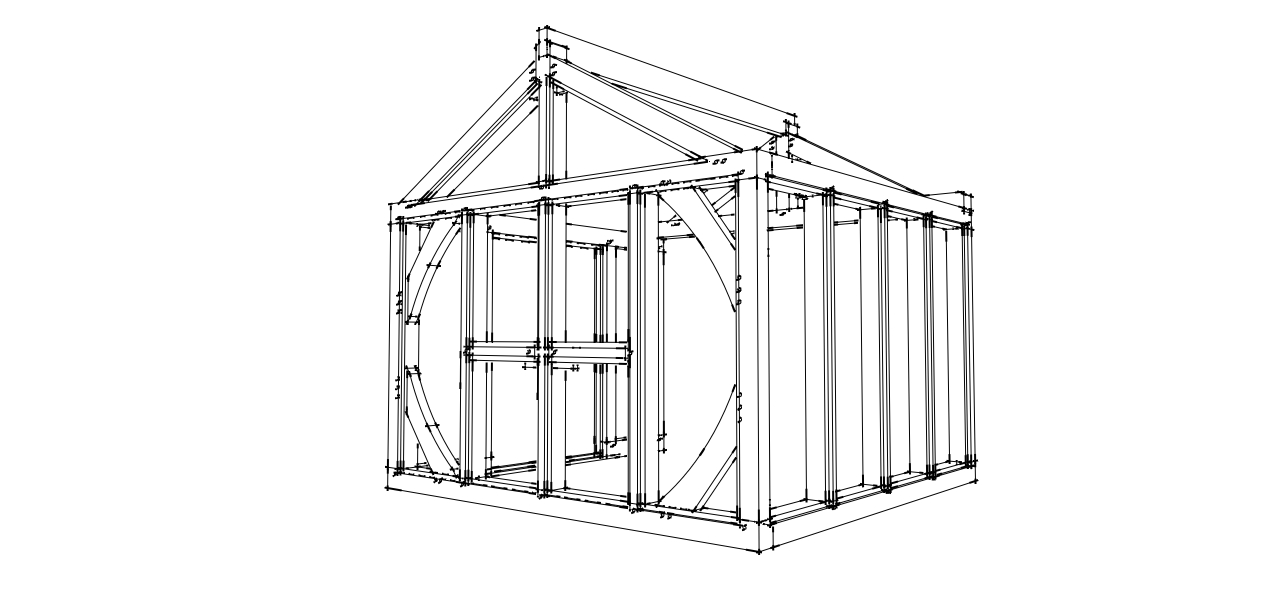
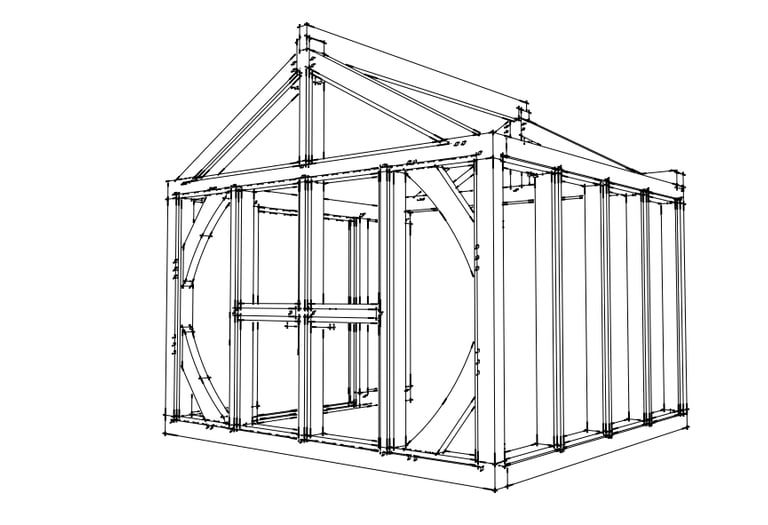
Bespoke timber frame plans tailored to your vision and site.
Craft
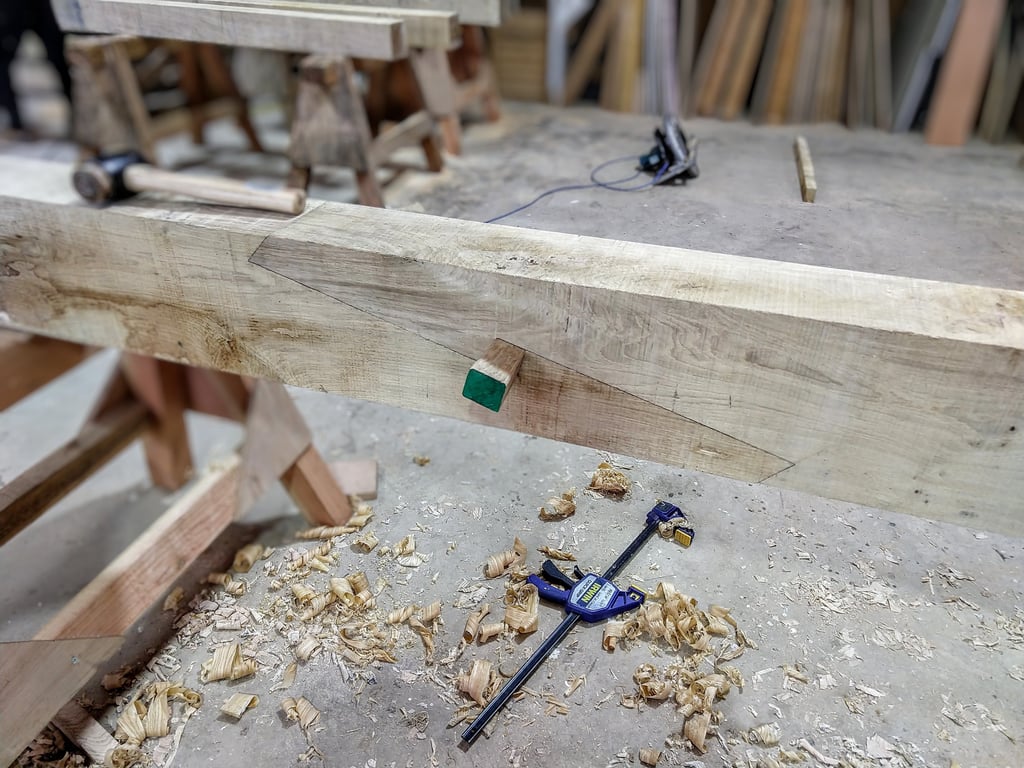
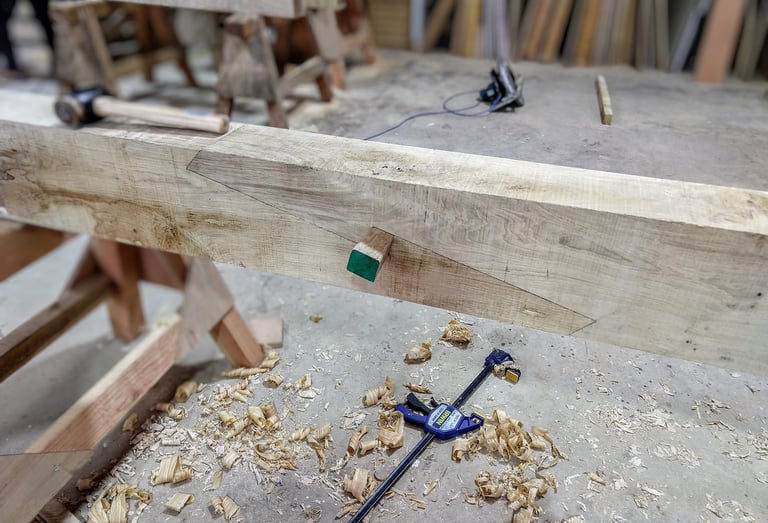
Precision hand-cutting of each beam using traditional tools.
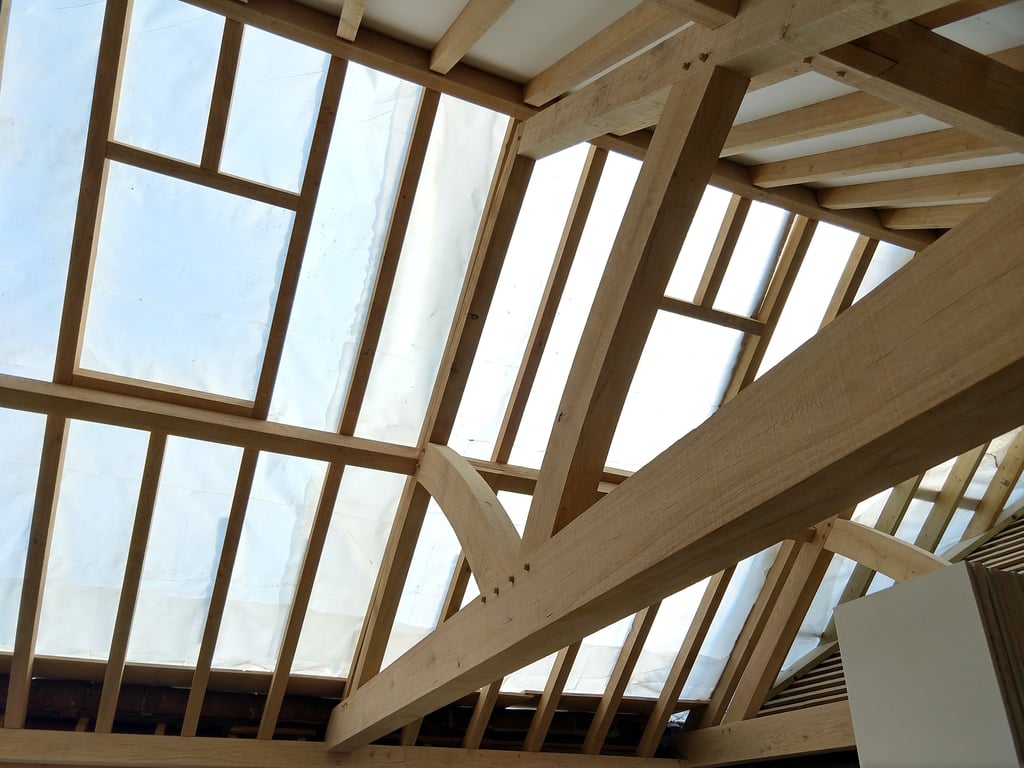
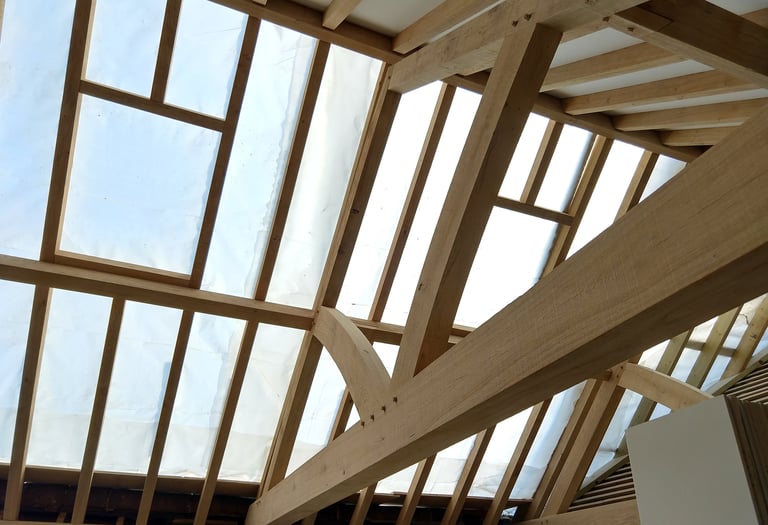
Raising the frame on-site with care and expert craftsmanship.
Raise
FAQs
What is timber framing?
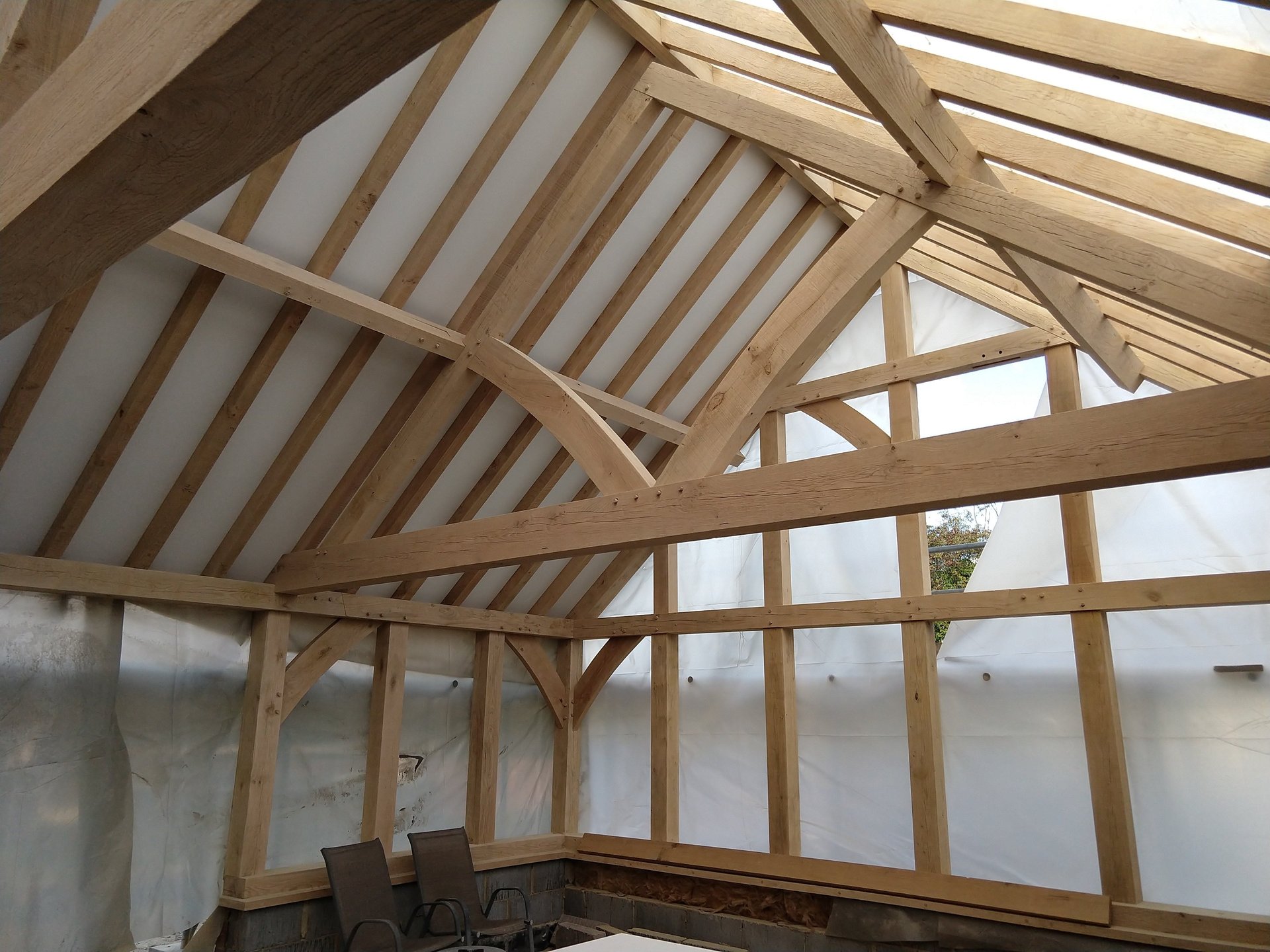
Timber framing is a traditional method of building still in use since the Medieval period and has seen a big resurgence in the last few decades. It utilises large section timbers, connected by wooden pegs and complex joinery normally with green or recently felled timber.
How long does a project take?
Project timelines vary depending on scale & complexity, but most frames once pre-fabricated can be raised in a few days. To fabricate again depends on complexity from 1-3 months. Planning your project ahead is obviously important so there are no unnecessary delays, booking the work in early is the best way to get the frame ready for when you need it!
Can you design me a custom frame?
Absolutely. I work closely with you to create hand-built frames tailored to your vision. I do love traditional work but if you have something creative or new I can work with you to design it too.
Do you handle installation?
Yes, I personally raise each frame on site to ensure quality and fit. Smaller frames can be done by hand, especially if made from Douglas Fir, but larger Oak frames will require some form of mechanical assistance tailored to site access of course.
What types of wood do you use?
Typically in the UK, timber frames will be made from Oak or Douglas-Fir, always FSC certified and can be locally sourced. Today English Oak is harder to source as we don't produce as much timber commercially, so often this comes from France where Oak is farmed in vast forests.
How do I get started with a project?
Reach out to chat about your ideas, and I’ll guide you through the design and build process.
Why has my frame twisted or the timbers started to crack?
That's normal! In traditional timber framing we use green or freshly sawn timber that has a high moisture content. Green timber is much softer and easier to work with and over time (about 1 year per inch of thickness) the timbers will dry and shrink. During this drying process the timbers will change shape, twist and check (crack) with many of the joints opening up slightly. The joints are designed so as this happens they actually get tighter, as the frame dries it will stiffen up and the timbers actually get stronger too. Oak frames will show the most movement due to its shrinkage rates, Douglas-fir being a more stable choice. Air-dried timber can be sourced to prevent any big movement later in life but this will add cost and time to the build process.
Contact
Email: steve@elliottstimberframing.co.uk
Mobile: +44 (0) 7505 011463
Wellesbourne
Warwickshire
© 2026. All rights reserved.